
Mil-Spec Coyote Guardian Paracord 550 Type III
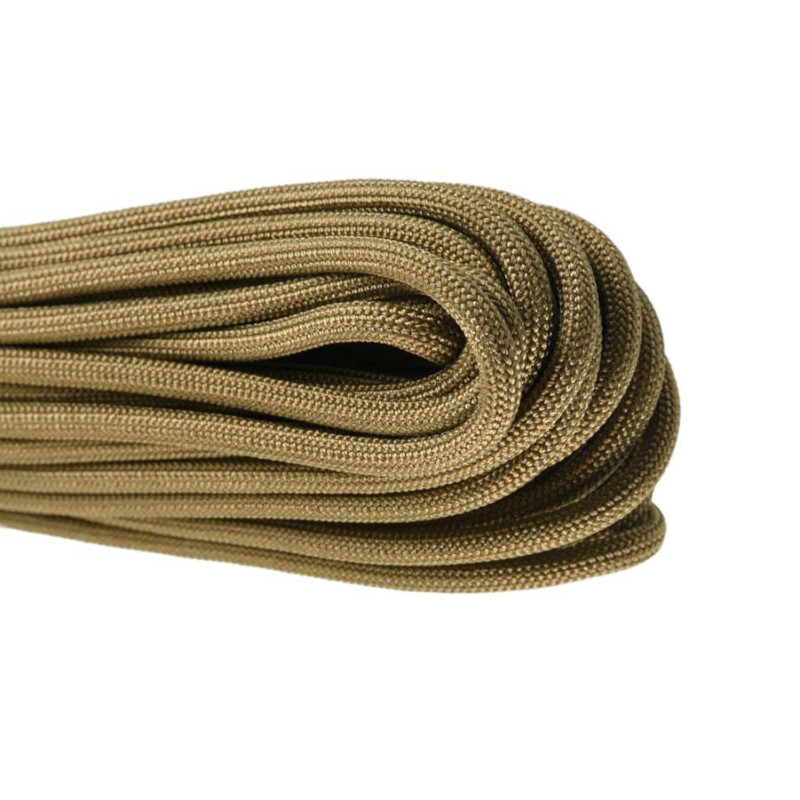
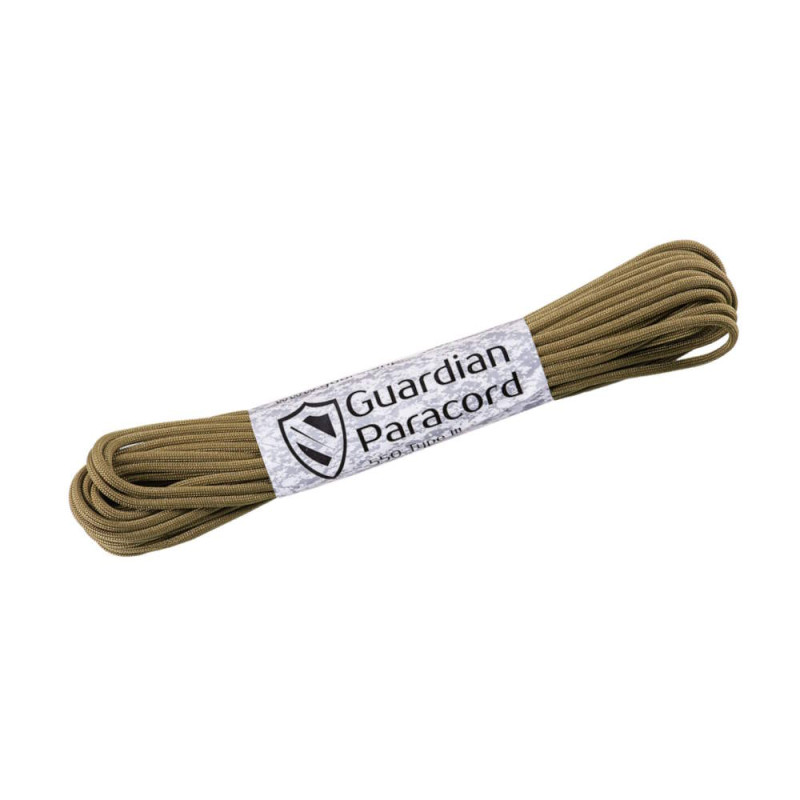


Guardian Mil-spec Paracord 550 is a unique product on the Ukrainian market. Thanks to the combination of technologies, materials and experience in the manufacture of cords, we are honored to present a paracord that meets the American military standard Mil-C 5040H TYPE III. This compliance guarantees that this paracord will provide maximum reliability, strength and the ability to withstand harsh operating conditions. Guardian Mil-spec Paracord 550 – Easily copes with the most difficult tasks that other cords cannot handle.
A feature of the construction is a reliable braid made of a special nylon thread, as well as nine main twisted core threads, and one marking thread - all these are signs of a real Mil-spec Paracord 550. The tensile testing also confirms the military strength of this cord - 270kg!
Characteristics:
9+1 core thread
Breaking load 270 kg
32 twisted braiding threads
100% nylon
Diameter 4mm
Weight 6.6g/meter.
Mil-C 5040H TYPE III compliant
Does not lose color, does not fade
Resistant to oils, chemicals, and rot.
MADE IN UKRAINE!
Paracord or cord (English paracord, cord, parachute cord) is a parachute cord, derived from parachute slings, which were actively used by paratroopers after landing during World War II. Due to its universal characteristics ( light, flexible, strong, multi-purpose ), paracord has become widespread among both the military and civilians. Paracord was even used by astronauts as a multi-purpose cord during the STS-82 mission to repair the Hubble Telescope.
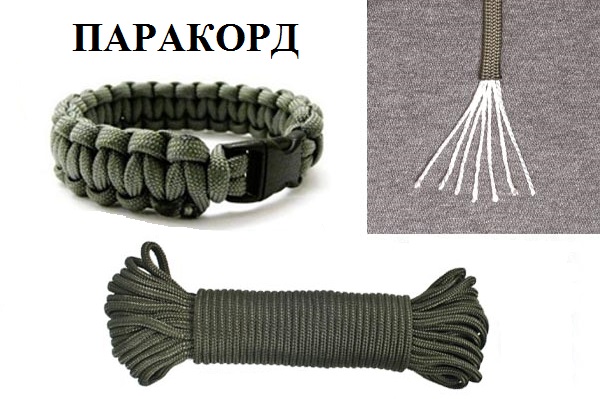
Paracord is a nylon cord consisting of an outer braid (a large number of intertwined fibers) and a core (several nylon threads intertwined), which ensures its strength and light weight. 
Paracord has several types (I, II, III, IV), which differ in the number of strands in the core, and therefore in its strength. Certified US military paracord is called Mil-Spec Paracord or MIL-C-5040 Type III (Military Specification), belongs to type III and withstands a breaking force of 550 pounds or 240 kg and has 7 strands in the core. Its commercial or civilian version – 550 Type III Сommercial – has the same strength characteristics. Weight: 30 m of paracord weighs approximately 200 g.
It is important to remember that paracord is not a climbing rope and can withstand static loads, not dynamic ones, i.e. it stretches slightly during a jerk or sudden load.
Uses: Paracord is a very good alternative to regular rope. Due to its universal characteristics ( lightweight, flexible, strong, multi-purpose, dries quickly, does not rot or mold ), the use of paracord is limited only by the physical properties of the paracord, the length of the cord and the imagination of the owner of the paracord bracelet, which is also called a "survival bracelet".
Here are more than 50 ways to use paracord:
Clothing/equipment
• for repairing clothing and equipment: sew with threads from the core, tighten/tie loose parts with a cord;
• paracord will replace a belt or can be used to make suspenders for pants; as strong shoelaces;
• if the zipper on your clothing or equipment breaks, you can tighten/tie it with paracord; 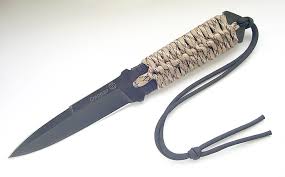
• as carabiners, straps, loops or attachments to equipment, for example, to distribute the weight of the load;
• to stretch a tent, tarpaulin, raincoat, tent, poncho; to secure camouflage, camouflage net; as a belt for an automatic rifle and other weapons;
• as a line for drying clothes and equipment;
• to braid the knife handle, make a knife lanyard;
• as a replacement for a climbing rope for descents and ascents. But you need to remember that paracord withstands static (without jerks) load, and not large jerks, such as when falling. You need to descend slowly and smoothly, it is advisable to tie the paracord into several cords;
• as a cable for lifting loads to a height;
• as a replacement for a safety rope: tie to a partner, preferably tie the paracord into several cords; as a leash during a night hike: tie to a partner;
• as a cord for stretching or signaling; to make a "cat" for demining;
Machinery
• as a spare tow rope: paracord in one cord can withstand a load of 250 kg, tied into 5 cords - a load of more than 1 ton;
• securing cargo and equipment to cars, boats, and military equipment;
• equipment repair: for example, taut paracord with knots – replacing fan belts;
In nature 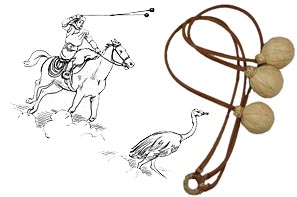
• as a binder instead of nails when building a storage facility;
• weave a hammock; make a trap (snare) for animals;
• tie logs together for a raft; make snowshoes from branches;
• make a bow to start a fire by friction;
• protect food supplies from animals and insects – hang them;
• make a spear, a sling, a "bolo" (strings with a weight for throwing);
• to send signals: for example, tie a mirror/glass/bright fabric to a tree;
Fishing
• threads from the core are used as fishing line for fishing;
• threads from the core are used to weave the net;
• for carrying or drying fish: pull a string through the gills;
• tie/moor the boat; 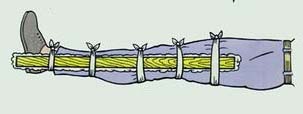
Medical assistance
• make a splint in case of a fracture or dislocation: tie a stick to the limb;
• make a bandage for the injured hand;
• untwist the core thread and use it for suturing;
• as a substitute for a tourniquet during bleeding;
• to make a stretcher: stretch a cord between two sticks; 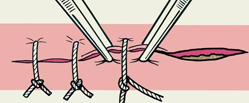
• weave a sling to carry the wounded person on oneself;
• pull a wounded person out from under fire; threads from the core like dental floss;
Other 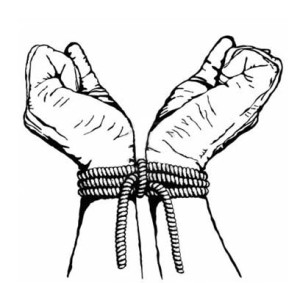
• to tie the hands/feet of an enemy, to tie up an enemy;
• to tie/tie an animal; to make a whip or a whip;
• weave beads or simply make knots – we will get a rosary or a tool for counting the distance or time traveled;
• make a sewing meter, replace the ruler;
• as a cord to make a ladder;
• as a replacement for the derived knot or "avosca";
GOOD LUCK!!!
Specification
| Color | Black |
| Pattern Type | One color |
| Paracord Type | 550 Type III |


